
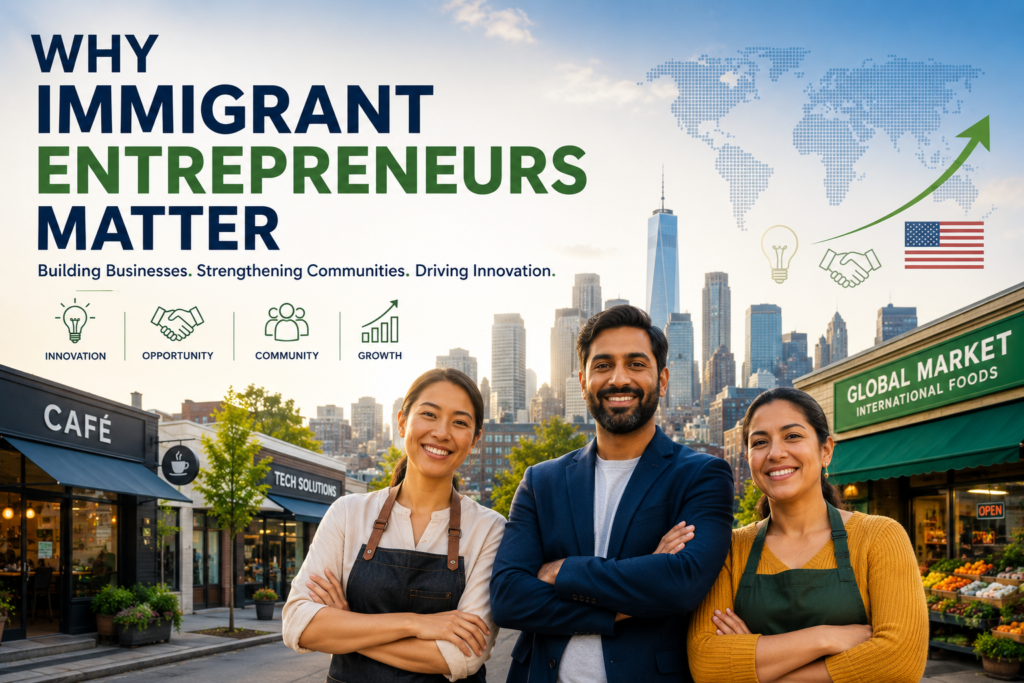
Immigrant entrepreneurship is not simply an immigration issue. It is an economic development opportunity
Public discussions about immigration often focus on borders, visas, labor markets, and public policy. While these conversations are important, they sometimes overlook another reality.
Millions of immigrants do more than seek employment-they create it.
Across the United States, immigrant-owned businesses contribute to local economies, introduce new ideas, revitalize neighborhoods, and generate employment opportunities. From neighborhood grocery stores to technology startups, immigrant entrepreneurs have become an important part of the American business landscape.
For me, immigrant entrepreneurship is not only about business ownership. It is about economic participation.
Entrepreneurship Creates More Than Businesses
When an immigrant starts a business, the impact extends beyond the owner. A successful business may hire local employees, purchase goods from nearby suppliers, pay taxes, occupy vacant commercial spaces, and serve surrounding communities. Over time, one small business can contribute to the vitality of an entire neighborhood. This reminds us that entrepreneurship is not only an individual achievement. It is also a community asset. The success of immigrant entrepreneurs often benefits people well beyond immigrant communities themselves.
Challenges Beyond Capital
Discussions about entrepreneurship frequently emphasize access to finance. While funding is important, it is only one part of the picture. Many immigrant entrepreneurs also face unfamiliar regulations, limited professional networks, language barriers, cultural differences, and difficulty navigating business support systems. These challenges are often invisible, yet they can influence whether a promising idea becomes a sustainable enterprise. Supporting immigrant entrepreneurship therefore requires more than financial investment. It requires access to information, mentorship, trusted networks, and institutions that understand the unique experiences of immigrant business owners.
Communities Grow Together
Entrepreneurship has the ability to connect people across cultures. Restaurants introduce new cuisines. Retail stores bring international products to local neighborhoods. Professional services create relationships between diverse communities. Innovation often emerges when different perspectives meet. In this sense, immigrant entrepreneurs do more than strengthen the economy. They also strengthen communities by creating places where people interact, exchange ideas, and build trust. Economic development and community development often move together.
Building Stronger Entrepreneurial Ecosystems
If immigrant entrepreneurs contribute so much, an important question follows.
How can entrepreneurial ecosystems become more inclusive?
Universities can provide entrepreneurship education. Local governments can simplify access to business information. Business organizations can expand mentoring opportunities. Financial institutions can improve access to responsible financing. Community organizations can create stronger professional networks. No single institution can solve every challenge. But together, they can create an environment where immigrant entrepreneurs have a greater opportunity to succeed.
Looking Ahead
America has long benefited from people who bring new ideas, different experiences, and an entrepreneurial spirit. As the economy continues to evolve, immigrant entrepreneurship should not be viewed as a separate conversation from economic development. The two are closely connected. Communities that welcome innovation, encourage entrepreneurship, and support diverse business owners are likely to become more resilient, competitive, and economically dynamic. Supporting immigrant entrepreneurs is therefore not simply about helping immigrants. It is about investing in stronger local economies and a more innovative future for everyone.
Immigrant entrepreneurs do not simply build businesses. They build opportunities, strengthen communities, and contribute to the continued evolution of the American economy. Perhaps the future of entrepreneurship is not defined by where entrepreneurs come from, but by what they are empowered to create after they arrive.